Digital design is changing in a noticeable way. Clean and overly polished layouts no longer feel personal to many users. Brands, creators, and designers now want visuals that feel warm, expressive, and human. This shift has pushed Tactile Craft & Folk-Inspired aesthetics into the spotlight.
People connect more deeply with visuals that feel handmade and emotionally grounded. Textured surfaces, imperfect typography, earthy tones, and artisan-inspired elements create experiences that feel authentic instead of robotic. In modern branding and web design, this approach helps businesses stand out while building trust with audiences. Many creative professionals even explore ideas like Designer Life Curation to understand how personal taste influences visual direction.
The rise of Tactile Craft & Folk-Inspired design is not only a visual trend. It reflects a larger movement toward creativity, individuality, and emotional storytelling.
Table of Contents
ToggleWhy Tactile Craft & Folk-Inspired Design Feels More Human
Modern audiences spend hours scrolling through repetitive digital content. Many websites and social feeds look identical because they follow the same minimalist structure. As a result, people naturally gravitate toward designs that feel real and personal.
Tactile Craft & Folk-Inspired aesthetics introduce warmth into digital spaces. Handmade textures, natural imperfections, and cultural influences create a stronger emotional connection with users.
Some of the key reasons this design style works include:
- It creates a sense of authenticity
- It makes brands feel approachable
- It adds emotional depth to visuals
- It improves storytelling through design
- It helps users remember a brand identity
Designs inspired by craft traditions often feel timeless because they are rooted in real artistic expression rather than temporary internet trends.
The Core Elements of Tactile Craft & Folk-Inspired Design
Several visual components define the Tactile Craft & Folk-Inspired style. When combined thoughtfully, these elements create immersive and memorable experiences.
Handcrafted Textures
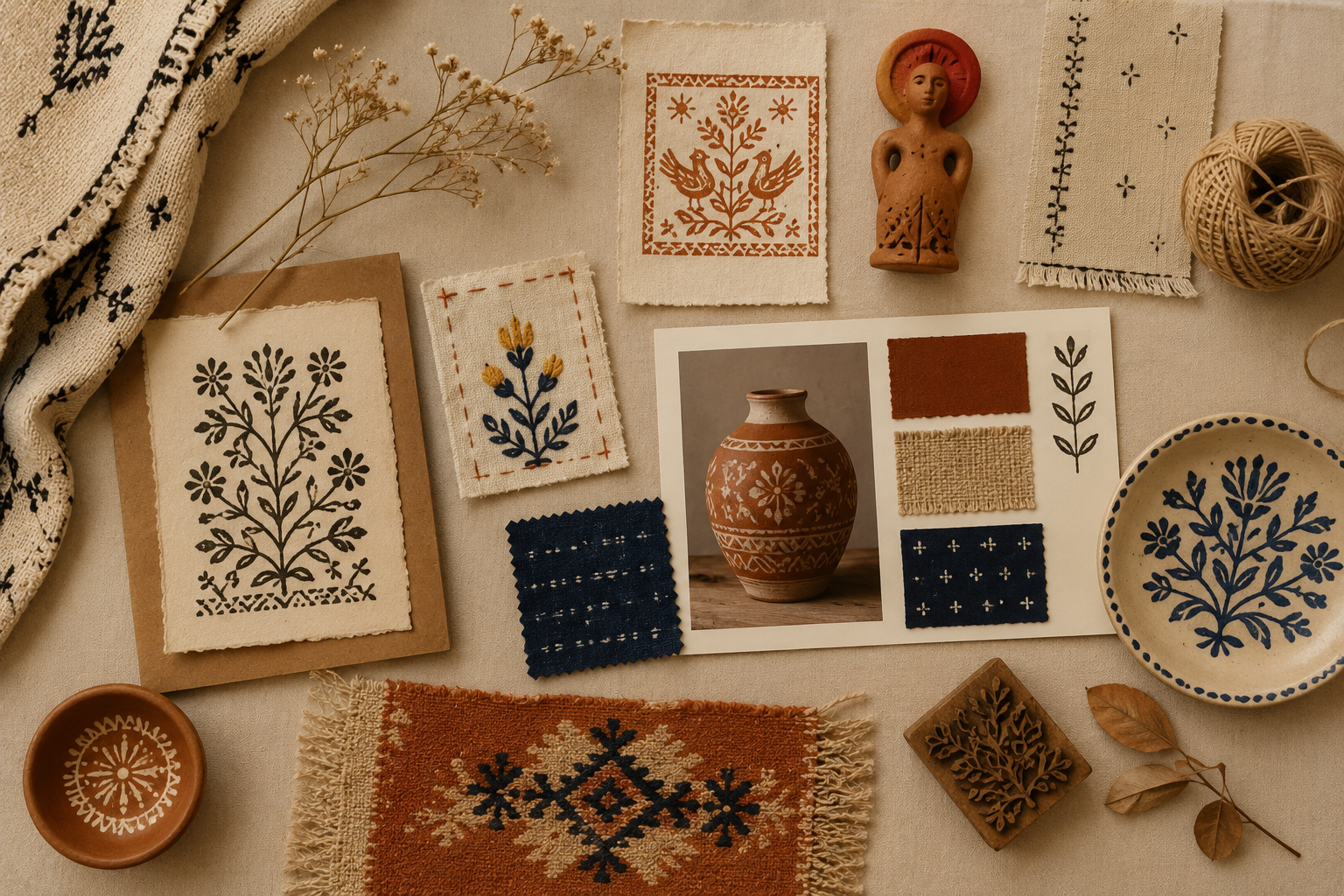
Textured backgrounds and layered surfaces make digital designs feel physical and tangible. Grainy paper effects, brush strokes, fabric inspired textures, and rough edges add depth without overwhelming the layout.
These details create a sensory experience that flat designs often lack.
Earthy and Organic Color Palettes
Muted greens, clay reds, warm browns, faded yellows, and deep terracotta shades dominate many Tactile Craft & Folk-Inspired projects.
These colors create calm and familiarity while reflecting natural materials and traditional artistry.
Folk Patterns and Cultural Motifs
Patterns inspired by folk art traditions bring personality into modern branding. Designers often use geometric shapes, botanical illustrations, embroidery inspired details, and symbolic artwork to create visual storytelling.
This approach celebrates heritage while giving modern interfaces a distinctive identity.
Imperfect Typography
Perfect alignment and ultra sharp typography can sometimes feel cold. Hand drawn fonts and slightly imperfect lettering create warmth and individuality.
This design technique helps brands feel more relatable and emotionally engaging.
How Brands Use Tactile Craft & Folk Inspired Aesthetics
Many modern brands now use Tactile Craft & Folk-Inspired visuals to create stronger audience engagement. Small businesses, lifestyle brands, cafés, fashion labels, and wellness companies especially benefit from this style.
Brands often apply these aesthetics in:
- Packaging design
- Website interfaces
- Product photography
- Social media graphics
- Editorial layouts
- Brand storytelling campaigns
For example, coffee brands use handcrafted textures and rustic typography to communicate authenticity and craftsmanship. Sustainable fashion labels use earthy visuals and organic layouts to reflect ethical values.
This visual language immediately communicates personality before users even read the content.
Some designers also compare performance and structure using Effective UX Design Signs to ensure these aesthetic choices still support usability.
The Connection Between Folk Inspired Design and Emotional Branding
Modern branding depends heavily on emotional connection. Consumers are more likely to support businesses that feel genuine and relatable.
Tactile Craft & Folk-Inspired aesthetics naturally support emotional branding because they emphasize human creativity. Handmade visuals remind people of artistry, culture, tradition, and real craftsmanship.
This emotional quality increases audience trust and engagement.
Instead of presenting brands as overly corporate, tactile design introduces warmth and personality. Users feel like they are interacting with something thoughtfully created rather than mass produced.
That emotional difference matters in competitive digital markets.
Why This Design Trend Works Well for Websites
Website visitors make decisions within seconds. A strong visual atmosphere helps users stay engaged longer.
A Tactile Craft & Folk-Inspired website feels immersive because it combines storytelling with sensory inspired design. Textured backgrounds, layered visuals, warm typography, and natural spacing guide users through content more naturally.
This style also improves brand memorability.
Modern websites often look overly sterile. Tactile design breaks that pattern by introducing individuality and visual richness without sacrificing usability.
Developers sometimes even enhance presentation using Photoshop Web Effects Guide techniques to refine textures and depth.
When balanced properly, it creates a professional yet approachable experience.
Best Practices for Using Tactile Craft & Folk Inspired Design
Using this style effectively requires balance. Too many textures or decorative elements can overwhelm users.
Here are practical ways designers can apply Tactile Craft & Folk-Inspired aesthetics successfully:
Focus on Authentic Details
Use realistic textures and handcrafted visuals instead of artificial effects. Authenticity matters more than decoration.
Keep Layouts Readable
Textured visuals should support readability rather than distract from it. Maintain clear typography hierarchy and proper spacing.
Use Cultural Inspiration Respectfully
Folk inspired design works best when designers appreciate cultural artistry thoughtfully rather than copying symbols without meaning.
Blend Modern and Traditional Elements
Combining modern usability with handcrafted visuals creates the strongest results. This balance keeps interfaces functional while maintaining warmth.
Prioritize Storytelling
Every texture, color, and visual detail should support the brand story. Strong storytelling makes the design feel intentional.
The Future of Tactile Craft & Folk Inspired Creativity
As digital experiences continue evolving, audiences will likely continue seeking authenticity. Artificial intelligence and automation have increased the demand for designs that feel personal and emotionally grounded.
This is why Tactile Craft & Folk-Inspired aesthetics continue gaining popularity across branding, UI design, publishing, and creative marketing.
The future of design will not only focus on technology. It will also prioritize emotional resonance and sensory experience.
Even emerging designers often experiment with Photoshop Web Effects Guide workflows to bring tactile realism into digital interfaces.
Designers who understand this balance will create more meaningful and memorable digital experiences.
Conclusion
The growing popularity of Tactile Craft & Folk-Inspired aesthetics reflects a deeper shift in modern creativity. People want visuals that feel expressive, human, and emotionally engaging.
Handcrafted textures, earthy color palettes, folk-inspired patterns, and organic layouts help brands create stronger connections with audiences. These elements transform digital experiences into something more personal and immersive.
In a world filled with polished and repetitive interfaces, tactile and folk-inspired design offers a refreshing sense of authenticity. It reminds users that creativity still carries the mark of human expression.