
Introduction
Modern industries are changing faster than ever before. Businesses are searching for smarter ways to improve productivity, reduce operational costs, and stay competitive in a digital economy. One of the biggest changes shaping this transformation is Robotics as a Service Transforming industrial operations across manufacturing, logistics, healthcare, and retail sectors.
Companies no longer need massive investments to adopt robotics technology. Today, businesses can access advanced robotic systems through flexible subscription based models. This approach allows organizations to scale automation according to their operational needs without managing expensive infrastructure.
The rise of artificial intelligence, cloud computing, and connected systems has made robotics more practical and accessible for businesses of all sizes. From automated warehouses to AI powered production lines, Robotics as a Service Transforming industries has become a key driver of modern business innovation.
Many organizations are also combining robotic infrastructure with stronger sovereign cloud security frameworks to protect operational data and maintain compliance across digital environments.
What is Robotics as a Service
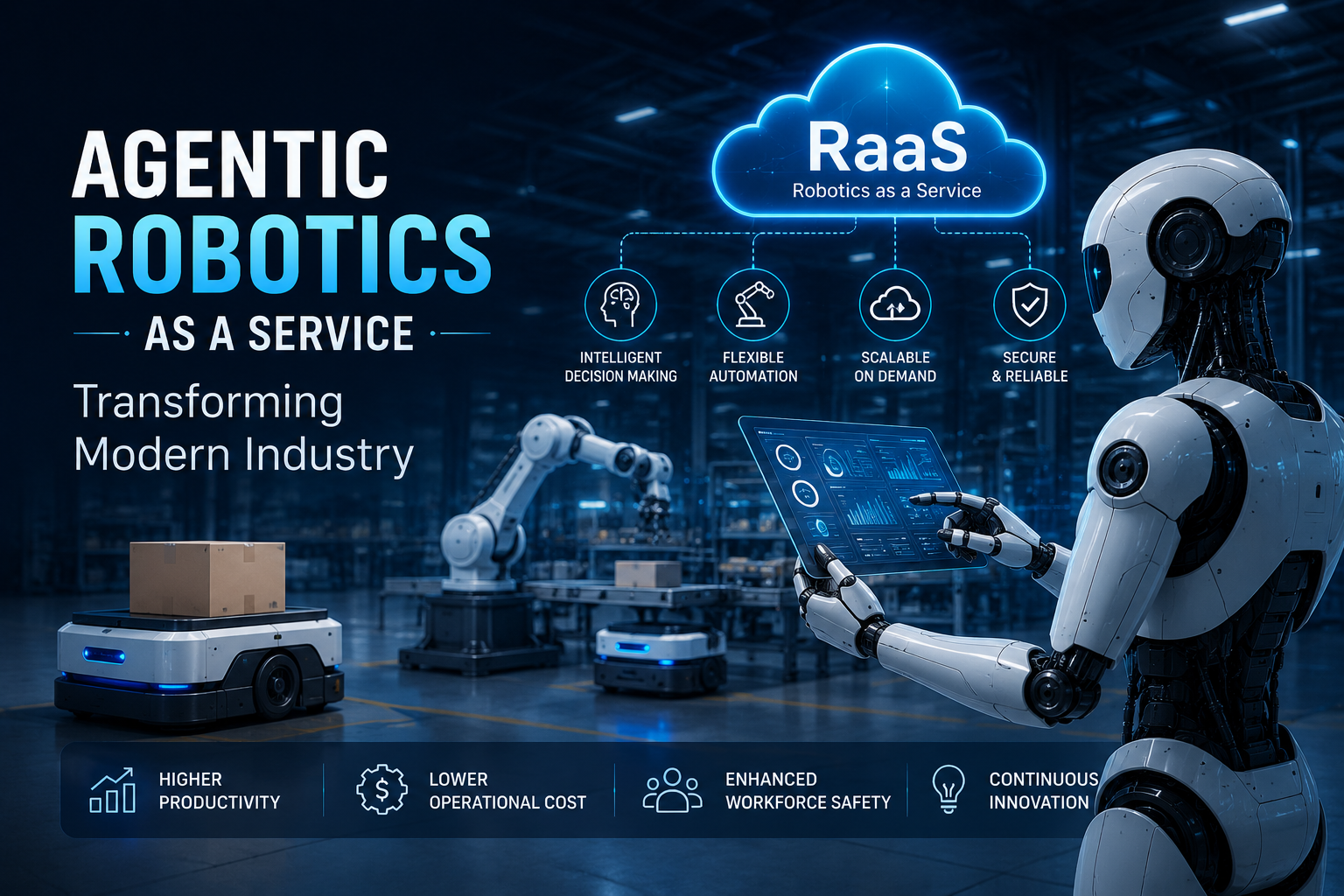
Robotics as a Service, commonly known as RaaS, is a cloud based business model where companies rent robotic systems instead of purchasing them outright. Businesses pay monthly or yearly subscriptions for robotic hardware, software, maintenance, and updates.
This model works similarly to software subscriptions used by many modern organizations. Instead of owning expensive robotic systems, companies gain access to scalable automation services with lower upfront costs.
Key components of RaaS include:
- Cloud connected robotics
- Remote monitoring systems
- AI powered automation tools
- Predictive maintenance services
- Real time analytics
- Flexible deployment options
The growing popularity of Robotics as a Service Transforming enterprise operations comes from its affordability and flexibility.
Why Industries are Adopting RaaS
Businesses are under constant pressure to improve efficiency while managing rising labor and operational costs. Traditional automation systems often require significant investments, technical expertise, and long deployment periods.
RaaS eliminates many of these challenges.
Lower Initial Investment
Companies can deploy robotic systems without spending millions on infrastructure. Subscription based robotics helps organizations control costs while gaining access to modern automation technologies.
Faster Deployment
Cloud robotics platforms allow businesses to implement robotic systems quickly. Companies can integrate automation into existing workflows without major operational disruption.
Easy Scalability
As businesses grow, robotic services can scale with operational demands. This flexibility makes Robotics as a Service Transforming industries highly attractive for expanding enterprises.
Continuous Software Updates
RaaS providers regularly improve AI models, security systems, and robotic performance. Businesses benefit from the latest innovations without replacing existing hardware.
How AI is Powering Modern Robotics
Artificial intelligence is the foundation of next generation robotic systems. AI allows robots to learn from data, recognize patterns, and adapt to changing environments.
Modern robotic systems can:
- Analyze operational data in real time
- Detect equipment failures early
- Optimize warehouse operations
- Improve supply chain management
- Perform repetitive tasks with high accuracy
AI driven robotics also improves decision making across industrial environments. Machine learning algorithms help businesses identify inefficiencies and improve productivity over time.
This combination of AI and automation is one of the biggest reasons Robotics as a Service Transforming modern industry continues to grow globally.
Robotics in Manufacturing
Manufacturing remains one of the largest adopters of robotic automation. Smart factories now use robotic systems for assembly, packaging, inspection, and quality control.
Benefits of robotics in manufacturing include:
Improved Productivity
Robots can operate continuously without fatigue. This increases production output while reducing downtime.
Better Product Quality
Automated systems perform tasks with precision and consistency, reducing manufacturing defects.
Workplace Safety
Dangerous and repetitive tasks can be handled by robotic systems, reducing workplace injuries.
Cost Efficiency
Businesses save money through reduced labor costs and improved operational efficiency.
Many manufacturers are now using Robotics as a Service Transforming production facilities into highly connected smart environments.
These innovations are also influencing consumer technology trends and creating opportunities for smart living essentials powered by automation and connected AI systems.
Warehouse and Logistics Automation
Ecommerce growth has increased demand for faster and more accurate logistics operations. Warehouses now rely heavily on robotics for inventory management and order fulfillment.
Robotic systems in logistics help businesses:
- Move products efficiently
- Reduce human error
- Improve delivery speed
- Optimize storage management
- Increase supply chain visibility
Autonomous mobile robots are becoming common in large warehouses where speed and accuracy are essential.
The logistics sector clearly demonstrates how Robotics as a Service Transforming supply chain operations creates measurable business value.
The Role of Cloud Robotics
Cloud computing has become essential for modern robotic systems. Cloud robotics allows machines to process large amounts of data while staying connected across multiple locations.
Cloud based robotics offers several advantages:
- Centralized management
- Real time monitoring
- Remote troubleshooting
- Faster software updates
- Better data security
- Improved scalability
Businesses can monitor robotic performance from anywhere while maintaining operational control through secure cloud platforms.
Cloud connected systems are accelerating Robotics as a Service Transforming global industries into more agile and data driven ecosystems.
Challenges Businesses Must Consider
While robotic automation offers significant benefits, businesses still face several important challenges.
Cybersecurity Risks
Connected robotic systems can become targets for cyberattacks. Organizations must invest in strong cybersecurity frameworks and data protection strategies.
Workforce Adaptation
Employees may require new technical skills to work alongside robotic systems. Businesses should focus on workforce training and digital education.
Integration Complexity
Some organizations struggle to integrate robotics into older operational systems. Careful planning and technical support are essential for smooth implementation.
Despite these challenges, businesses continue investing in Robotics as a Service Transforming operational efficiency and long term growth strategies.
Future of Robotics as a Service
The future of robotic automation looks highly promising. Advancements in AI, edge computing, and intelligent sensors are making robots smarter and more adaptable.
Future trends include:
- Human robot collaboration
- Autonomous industrial systems
- AI powered decision making
- Sustainable robotic operations
- Hyper automated supply chains
- Smart city robotics
Small and medium sized businesses are also expected to adopt robotics more rapidly as subscription models become increasingly affordable.
Experts believe Robotics as a Service Transforming modern business operations will become a standard strategy across multiple industries during the next decade.
Conclusion
Robotic automation is no longer limited to large enterprises with massive technology budgets. Today, businesses of all sizes can access advanced robotic systems through flexible and scalable service models.
The combination of artificial intelligence, cloud robotics, and automation platforms is reshaping industries worldwide. Companies that adopt modern robotic solutions are improving productivity, reducing operational costs, and building more resilient business models.
As digital transformation continues, Robotics as a Service Transforming industrial operations will remain one of the most important drivers of innovation in manufacturing, logistics, healthcare, and beyond.
Businesses that invest in intelligent automation today will be better prepared for the future economy driven by connected systems, data intelligence, and smart operational strategies.
