
Table of Contents
ToggleMeta Vision for AR in 2025 Revealed: A Deep Dive into the Future
The future of augmented reality is no longer a distant concept—it’s quickly becoming a practical reality. Meta Platforms has made it clear that AR is central to its long-term strategy. Under the leadership of Mark Zuckerberg, the company is investing heavily in wearable computing, spatial computing, and AI-powered AR experiences. As global businesses increasingly adopt enterprise AI transformation strategies, Meta is positioning AR as the next layer of digital infrastructure that connects people, data, and environments seamlessly.
Meta AR Vision 2025 represents more than just smart glasses. It’s a complete AR ecosystem that combines hardware innovation, software integration, artificial intelligence, and immersive user experience. The goal is simple but ambitious: merge the physical and digital worlds in a way that feels natural and useful.
With billions invested in research and development, Meta is positioning itself at the center of the next major digital transformation.
What is Meta AR Vision for 2025?
Meta AR Vision 2025 is a strategic roadmap focused on delivering consumer-ready AR glasses supported by a powerful AR operating system and AI integration.
Rather than relying on smartphones or bulky headsets, Meta envisions lightweight smart glasses capable of:
Displaying digital overlays in real time
Offering context-aware AI assistance
Supporting spatial audio and natural hand tracking
Running standalone AR apps
This vision aligns with the broader metaverse roadmap, but with a practical twist everyday usability. Instead of virtual worlds alone, the emphasis is on enhancing real-world interaction.
The Core Components of Meta AR Vision 2025
Meta’s roadmap is supported by several groundbreaking components:
1. Project Nazare – Meta’s First AR Glasses
At the center of this strategy is Project Nazare, Meta’s first fully independent AR glasses.
Unlike traditional mixed reality headsets, Project Nazare aims to look and feel like regular eyewear. The device is being engineered with advanced micro-display technology, custom silicon chips, and high-resolution lenses that work even in bright daylight.
Key expected features include:
Real-time navigation overlays
Live language translation
Virtual calls projected into your field of vision
AI-driven contextual recommendations
Gesture and eye tracking controls
The biggest technical focus remains battery efficiency and lightweight design. Delivering all day battery life in wearable AR devices is one of the most significant engineering challenges Meta is solving.
If successful, Project Nazare could become the iPhone moment for AR hardware.
2. Reality Labs – Innovation Powerhouse
Behind the scenes, Reality Labs is driving AR hardware engineering and software innovation.
Reality Labs focuses on:
Ultra-precise hand tracking
Eye tracking technology
Spatial audio systems
Computer vision improvements
Power efficient AR display systems
The division has become the backbone of Meta’s AR ecosystem. With years of VR development experience, Reality Labs is now applying that knowledge to wearable AR devices that prioritize natural interaction.
This innovation hub is also building the standalone AR operating system known as Horizon OS, designed specifically for spatial computing and immersive computing experiences.
At the software layer, Meta is working toward a fluid and intuitive experience that mirrors the sophistication seen in modern UI systems such as the iOS Liquid Glass interface architecture, where depth, transparency, and layered visuals create a more immersive digital environment. Meta’s goal is to bring that same elegance and responsiveness into the AR space.
3. Meta AI Integration
Artificial intelligence is the brain behind Meta AR Vision 2025.
Meta plans to embed an advanced AI virtual assistant directly into its smart glasses. This assistant will use computer vision and contextual awareness to understand what you’re seeing and respond accordingly.
Imagine walking through a city and asking your glasses:
- What restaurant is that?
- Translate this sign.
- Summarize this email.
Instead of pulling out a phone, the information appears naturally in your line of sight.
AI-powered AR is what transforms smart glasses from novelty gadgets into productivity too
Use Cases: Real-World Applications of Meta AR
Meta’s AR strategy goes far beyond entertainment
1. Remote Work and Collaboration
Remote collaboration is evolving rapidly. AR-powered meetings could allow colleagues to interact with 3D project visualizations, digital whiteboards, and lifelike avatars.
Rather than staring at flat screens, teams could manipulate 3D prototypes together in shared virtual spaces. Eye contact simulation and spatial audio make interactions feel more human.
For global teams, AR could reduce travel while improving engagement.
2. Healthcare
AR enterprise applications are particularly promising in healthcare.
Surgeons could view patient data, 3D anatomical overlays, and scan results directly during procedures. Medical students could practice using interactive simulations.
By partnering with healthcare institutions, Meta is exploring how wearable AR devices can improve surgical precision and medical training outcomes.
3. Education
In education, AR transforms passive learning into immersive experiences.
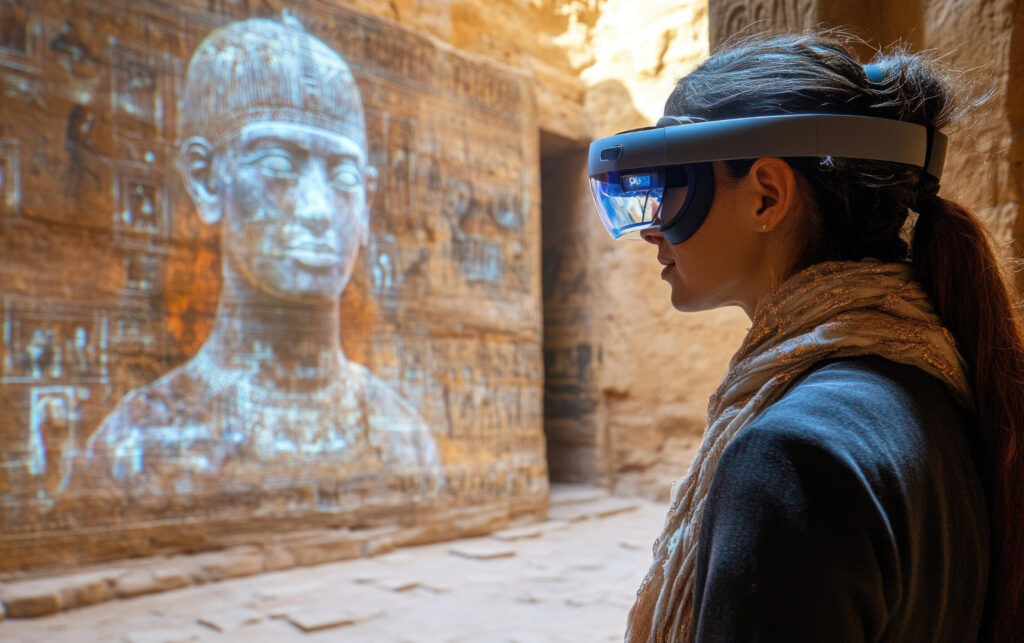
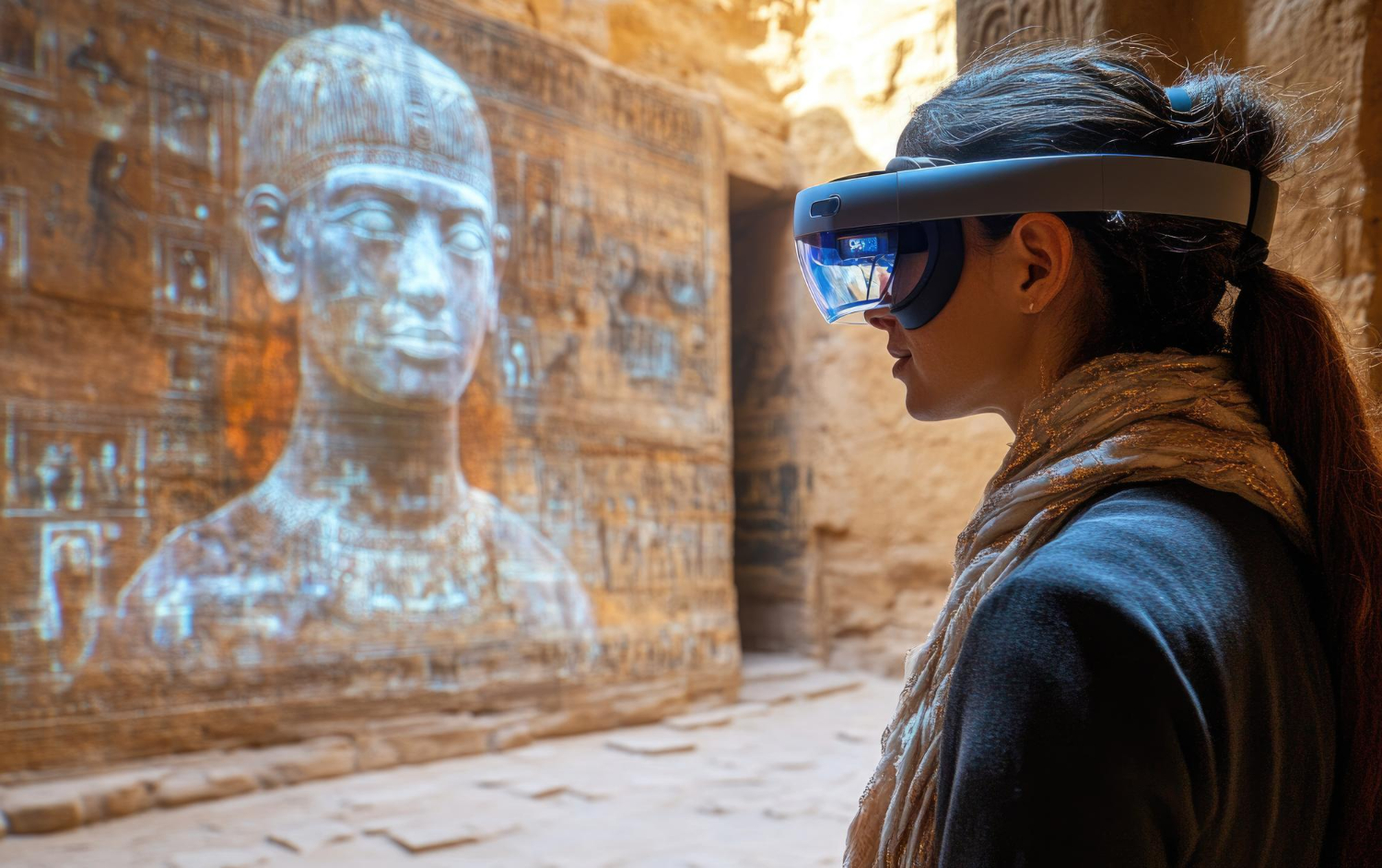
Students might explore ancient civilizations, examine virtual molecules, or dissect digital organisms. Lessons become interactive rather than purely theoretical.
AR user experience in classrooms could significantly improve engagement and knowledge retention.
4. Retail and E-Commerce
Retail is another major opportunity.
Consumers could try on clothes virtually, preview furniture in their homes, or view product details simply by looking at an item. AR storefronts blend physical shopping with digital convenience.
This integration could reshape both online and in-store retail experiences.
Meta’s Competitive Edge in the AR Race
Meta is not alone in the AR market. Competitors include Apple with Apple Vision Pro, Microsoft with HoloLens, and Google with its AR initiatives.
However, Meta holds several advantages:
Full Ecosystem Control – Hardware, software, social platforms, and developer tools all under one umbrella.
Massive User Base – Billions already use Meta’s social apps, making AR feature integration seamless.
Heavy Investment – Billions allocated to AR innovation and long-term development.
This vertical integration could accelerate AR adoption faster than competitors relying on partial ecosystems
Privacy and Ethical Considerations
With AR devices capable of recording environments and analyzing visual data, privacy concerns are inevitable.
Meta has indicated that its devices will include visible LED recording indicators and improved data transparency controls.
Still, public concerns about facial recognition, surveillance, and data security remain. Earning consumer trust will be just as important as technological innovation.
Challenges on the Horizon
Despite strong progress, several technical barriers remain:
Battery Life: Achieving all day performance in lightweight glasses.
Display Technology: Delivering bright, high-resolution visuals outdoors.
Affordability: Ensuring AR devices are accessible to mainstream users.
Developer Ecosystem: Encouraging third-party app creation.
Meta acknowledges these challenges but continues pushing forward with aggressive research and real world testing.
Timeline & What to Expect by 2025
By 2025, Meta aims to:
Launch consumer-ready AR glasses
Expand Horizon OS capabilities
Enable seamless integration across its platforms
Strengthen its AR developer ecosystem
Introduce more AI driven spatial computing tools
Industry analysts expect early releases followed by iterative improvements.
The Future of AR Belongs to Meta?
Meta is making one of the boldest bets in technology today. While success is not guaranteed, its AR product roadmap, investment scale, and ecosystem control give it a strong position.
If Project Nazare launches successfully and AI integration delivers real value, Meta could define the next era of wearable computing just as advanced automotive systems like the Tesla Full Self-Driving platform are redefining intelligent mobility through AI-powered autonomy.
Conclusion
Meta AR Vision 2025 represents a significant shift in how we interact with technology. Instead of screens dominating our attention, AR promises to enhance reality itself.
From healthcare and education to retail and remote work, the possibilities are extensive. The coming years will determine whether Meta can overcome technical and ethical challenges.
But one thing is clear: augmented reality is moving from concept to consumer reality and Meta intends to lead that transformation.
KYY Laptop Screen Extender 15.6 Review: Is It Worth It?
What is a Reasoning Model? AI Explained for 2026
Windows 11 26H1 Update: New Features & Changes Explained
Taylor Swift Documentary on Disney+
Huawei Pura 90 Series: Specs, Features, Price & Launch Details in 2026
OpenAI O3 Models in 2026: Advanced AI for Reasoning, Coding & Enterprise Solutions
Share