
Introduction
Smartphone buyers today focus heavily on camera quality, performance, and long term usability before making a decision. The competition in the mid premium segment has increased, and Oppo continues to push boundaries with its Reno series. The discussion around Oppo Reno 14 Pro vs 13 Pro has gained attention because users want to know whether the newer model truly brings meaningful improvements or just minor refinements.
Both devices aim to deliver a balanced experience with strong photography capabilities, smooth performance, and attractive design. However, small upgrades in sensors, image processing, and software optimization can create a noticeable difference in real world usage.
This comparison helps you understand what actually changes between the two generations and whether upgrading makes sense.
Design and Build Experience
The design philosophy of Oppo has always focused on elegance and comfort. When comparing Oppo Reno 14 Pro vs 13 Pro, both devices maintain a premium feel with a slim profile and curved edges that fit comfortably in hand.
The Reno 13 Pro already introduced a polished glass finish with a lightweight frame. The newer model refines this approach further with improved material durability and slightly better grip handling. While both devices look similar at first glance, subtle refinements make the newer version feel more modern.
Key design highlights include:
- Slim and lightweight construction for daily comfort
- Premium glass back with smooth finishing
- Improved durability against scratches and minor impacts
- Clean camera module integration
The design evolution is not dramatic, but it focuses on refinement rather than reinvention.
Display Quality and Viewing Experience
Display quality plays a major role in daily smartphone usage, from scrolling social media to watching videos. In Oppo Reno 14 Pro vs 13 Pro, both phones offer high refresh rate AMOLED panels that deliver smooth visuals and vibrant colors.
The Reno 13 Pro already provides strong brightness levels and accurate color reproduction. The newer generation improves outdoor visibility and enhances adaptive brightness control for more natural viewing in different lighting conditions.
Key display improvements:
- Higher peak brightness for outdoor clarity
- Better color tuning for realistic visuals
- Smooth refresh rate for gaming and scrolling
- Reduced eye strain with improved adaptive adjustments
The difference may not be dramatic for casual users, but those who consume a lot of media will notice a more refined display experience.
Performance and Everyday Usage
Performance is one of the most important factors in any smartphone comparison. The Oppo Reno 14 Pro vs 13 Pro discussion highlights improvements in chipset efficiency, thermal management, and multitasking capability.
The Reno 13 Pro already handles everyday tasks smoothly, including social media, browsing, and moderate gaming. However, the newer model focuses on better optimization rather than just raw power.
Key performance aspects:
- Faster app launch times
- Improved gaming stability under load
- Better heat control during long usage
- Smoother multitasking experience
For users interested in gaming-focused devices, titles like Ultimate gaming phone 2025 often come up in comparisons, showing how performance expectations continue to rise across smartphone categories.
The upgrades make the device more consistent in long term usage, especially for users who rely heavily on their phones throughout the day.
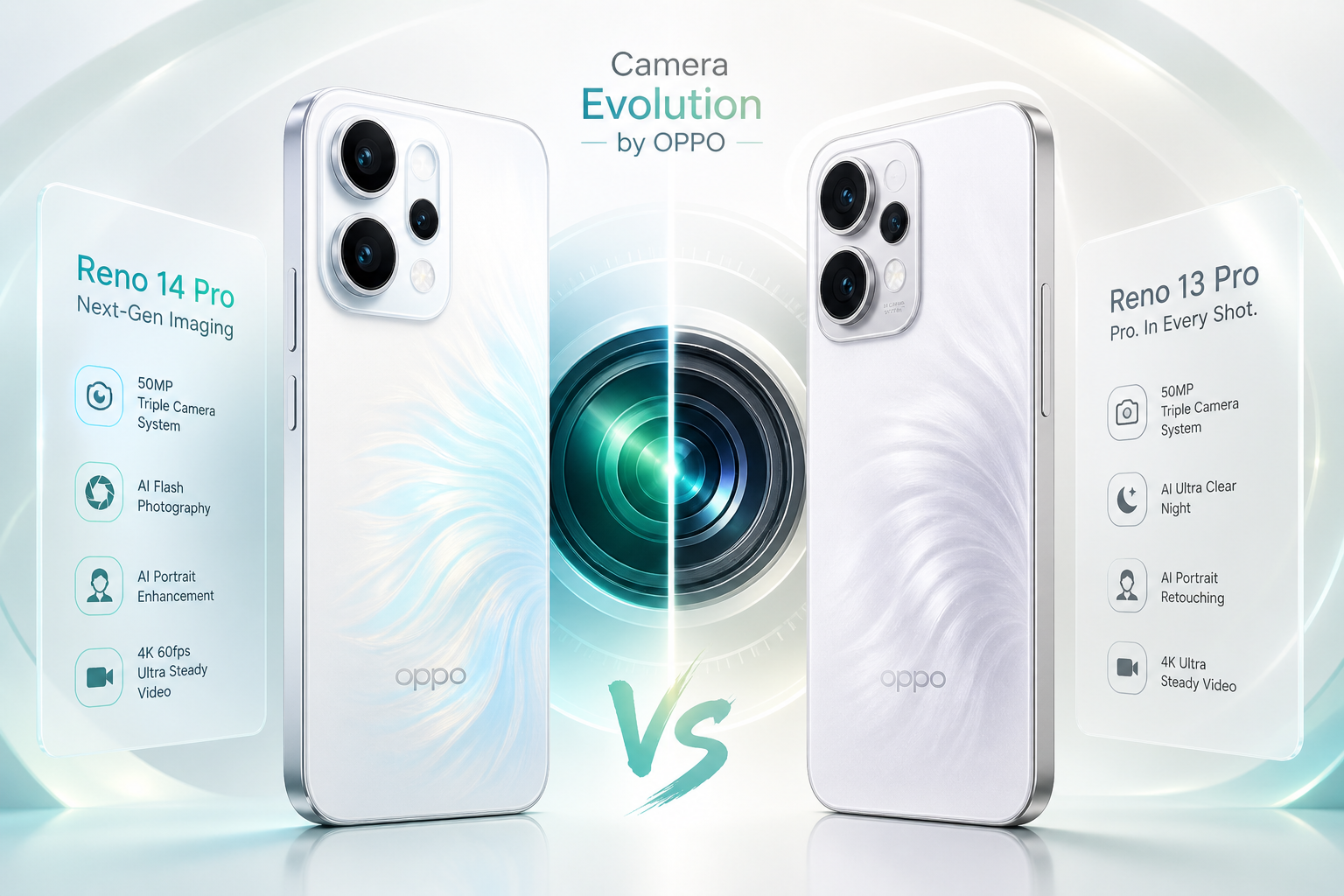
Camera Evolution and Photography Upgrade
The most talked about area in this comparison is the camera system. Oppo continues to strengthen its reputation in mobile photography, and this generation focuses heavily on image processing improvements.
The previous model already delivers strong results in daylight photography, portrait shots, and night mode performance. However, the newer version enhances clarity, color balance, and dynamic range through improved AI algorithms and sensor tuning.
Main camera improvements:
- Sharper image output with better detail retention
- Improved low light photography with reduced noise
- More natural skin tones in portrait shots
- Enhanced HDR for balanced highlights and shadows
- Better zoom clarity with refined processing
Many users searching for camera troubleshooting also look for resources like Redmi camera fix guide when facing blurry or unclear image issues on different smartphones. This shows how important camera optimization has become across brands.
The camera upgrade is not just about hardware but also smarter software optimization. This makes the comparison more meaningful for photography enthusiasts.
Video Recording and Stability
Video performance has become increasingly important for content creators and social media users. Both devices support high quality recording, but the newer model introduces better stabilization and color consistency.
In real world usage:
- Videos appear smoother during movement
- Colors remain more consistent across lighting changes
- Reduced shaking during handheld recording
- Better audio synchronization in recordings
These improvements make the newer model more suitable for vlog style content and daily video capture.
Battery Life and Charging Performance
Battery efficiency is another important factor in daily smartphone use. Both phones are designed to last a full day under normal usage conditions, but optimization improvements in the newer model extend usage slightly further.
Highlights include:
- Improved battery management for background apps
- Faster and more efficient charging support
- Better power optimization during gaming and streaming
- Longer screen on time under mixed usage
Charging speed has become a major decision factor for users today. Many real world tests, such as Fast charging analysis K90, show how brands are competing to reduce charging time while maintaining battery health and efficiency.
The difference in this comparison is not extreme, but it contributes to a more reliable daily experience.
Software Experience and Features
Oppo’s software experience continues to evolve with smoother animations and smarter features. Both devices run feature rich systems with customization options and AI based enhancements.
The newer model improves:
- System fluidity and responsiveness
- AI based photo editing tools
- Smart battery optimization
- Better privacy and security features
These improvements make the interface feel more refined and user friendly.
Real World Usage Comparison
When comparing these two smartphones, the real difference becomes clear during daily usage rather than just on paper specifications.
- The newer model feels slightly faster in multitasking
- Camera performance is more consistent in different lighting
- Display tuning offers a more comfortable viewing experience
- Battery optimization provides better long term stability
The older model still performs well, but the newer version focuses on refinement and consistency.
Should You Upgrade?
Choosing between both devices depends on your usage pattern.
You may consider upgrading if:
- You prioritize mobile photography
- You want better low light camera performance
- You use your phone heavily throughout the day
- You prefer smoother software experience
You may skip upgrading if:
- You already own the previous model
- Your usage is basic like calls, browsing, and social media
- You are satisfied with current camera performance
Conclusion
This comparison shows that the difference is more about refinement than a complete overhaul. The newer device enhances camera quality, improves performance efficiency, and offers a smoother user experience overall. Both devices remain strong contenders in the premium mid range segment, but the newer generation focuses on polishing existing strengths rather than introducing drastic changes.
