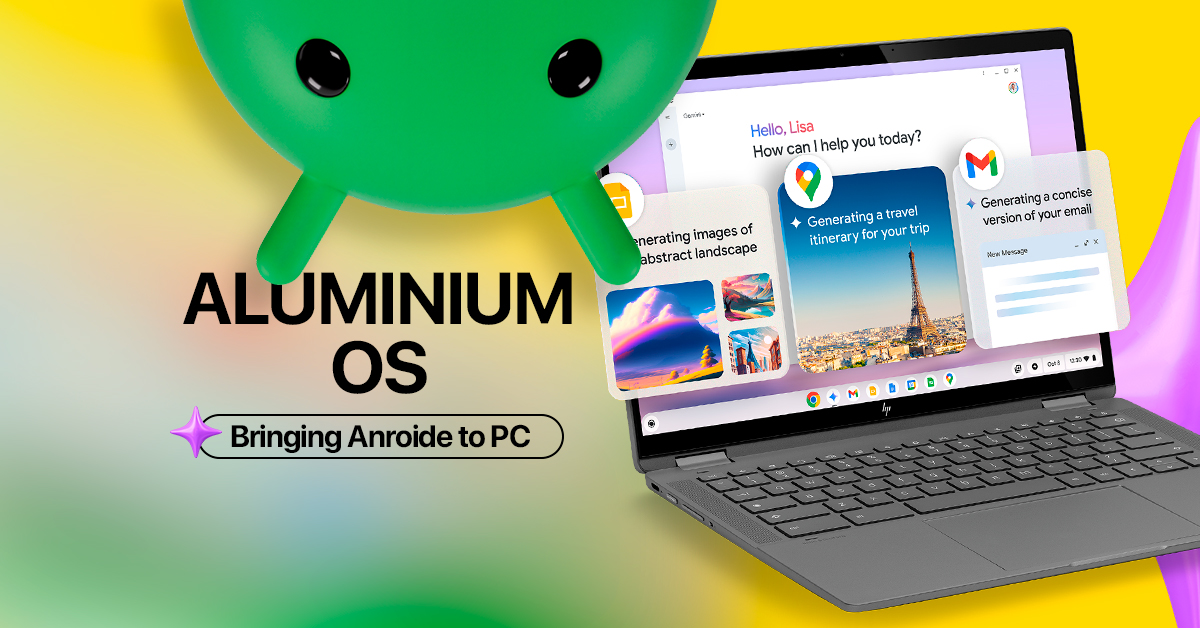
Google is making waves in the tech world with its ambitious new project: Aluminium OS. Designed to unify Android and ChromeOS, this AI-powered operating system is set to redefine desktop computing and challenge giants like Windows and macOS. If you’re wondering what Aluminium OS is, why it matters, and how it could impact the future of PCs, this blog covers everything you need to know.
What is Aluminium OS?
Aluminium OS is Google’s upcoming Android-based operating system for PCs, aimed at replacing ChromeOS. Unlike ChromeOS, which focused on lightweight, browser-centric tasks, Aluminium OS promises a full desktop experience powered by AI at its core. Google announced this project during the Qualcomm Snapdragon Summit, confirming deep integration with Gemini AI, Google’s advanced language model.
Why is Google Building Aluminium OS?
For years, Google dominated mobile with Android but struggled to gain traction in the PC market. ChromeOS carved a niche in education and budget laptops but couldn’t compete with Windows or macOS for premium users. Aluminium OS changes that by:
- Unifying Platforms: Combining Android’s versatility with ChromeOS’s desktop features.
- AI Integration: Embedding Gemini AI for smarter multitasking, predictive assistance, and on-device generative AI.
- Expanding Hardware Support: From laptops and tablets to mini-PCs and detachable devices.
Key Features of Aluminium OS
-
AI at the Core
Unlike traditional OS designs, Aluminium OS integrates AI at the architectural level. Expect features like real-time behaviour adaptation, advanced multitasking, and offline AI capabilities.
-
Gemini-Powered Productivity
Google’s Gemini AI will enable voice commands, smart search, and predictive workflows, making PCs more intuitive than ever.
-
Enhanced Desktop Experience
Redesigned windowing system, better keyboard/mouse navigation, and support for high-resolution displays will make Aluminium OS feel like a true desktop OS—not just a stretched mobile interface.
-
Broad Device Compatibility
Aluminium OS will run on laptops, tablets, and mini-PCs, with tiers ranging from AL Entry to AL Premium, targeting both budget and high-end markets.
Benefits for Users and Businesses
- Access to Android’s App Ecosystem: Millions of apps available on day one.
- AI-Driven Efficiency: Faster workflows, smarter recommendations, and improved security.
- Enterprise Continuity: ChromeOS will coexist during the transition, ensuring businesses aren’t disrupted.
Release Timeline
Google plans to launch Aluminium OS in 2026, likely based on Android 17. Early prototypes are already being tested on devices powered by Qualcomm Snapdragon and Intel Alder Lake processors.
Why Aluminium OS Could Change the Game
Aluminium OS isn’t just another operating system—it’s Google’s bold attempt to reshape the PC landscape. By merging Android’s flexibility with AI-driven intelligence, Google is positioning itself as a serious competitor to Windows and macOS. For users, this means smarter, faster, and more connected computing experiences.
Final Thoughts
As we move toward an AI-first future, Aluminium OS could become the go-to platform for next-generation PCs. Whether you’re a tech enthusiast, developer, or business leader, this is one project you’ll want to keep an eye on.